

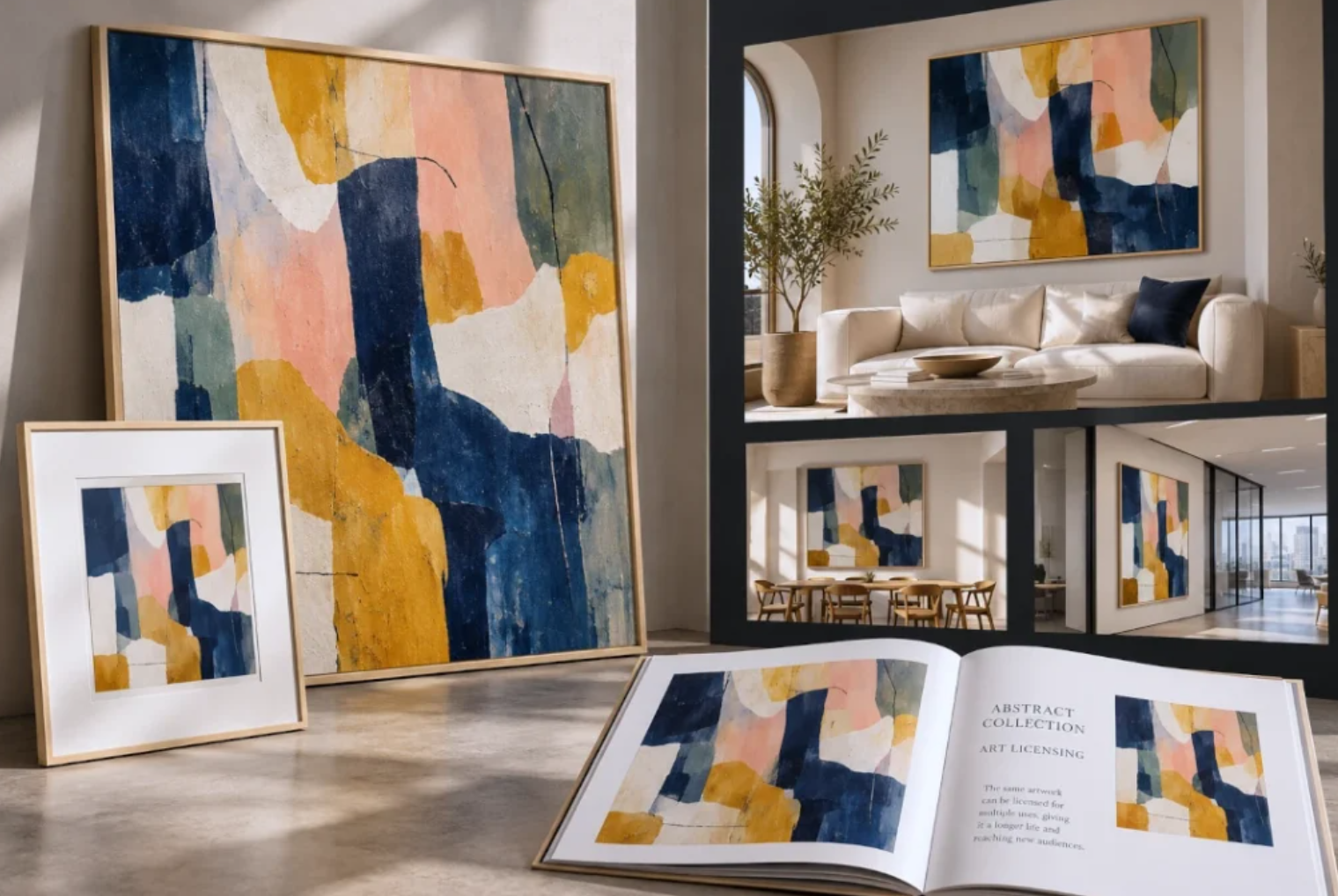
Making art is one thing. Making a living from it often means understanding how to let other people use your work without giving it away. Licensing is one of the most powerful tools available to artists, allowing the same piece to earn income in multiple ways, from products and publications to advertising and digital platforms. But it also comes with legal and practical details that are easy to overlook. Here’s what every artist should understand before signing an agreement or granting permission.
Ownership and Licensing Are Not the Same Thing
The first concept to grasp is the difference between owning your work and licensing it. In most places, the creator automatically holds the copyright the moment a piece is made. Copyright is a bundle of rights, including the right to reproduce, distribute, display, and create derivative works. Licensing means granting someone permission to use some of those rights, under specific conditions, while you keep ownership. Selling a physical painting, for example, does not usually transfer the copyright. Understanding this distinction helps you avoid accidentally giving away more than you intended.
Know the Types of Licenses
Licenses come in several forms, and the details matter. A non-exclusive license lets you grant similar permissions to multiple parties, while an exclusive license limits use to one licensee, often for a higher fee. Terms can be limited by time, geography, medium, or purpose, such as permission to use an image on packaging for two years within one country. Some artists use royalty arrangements, receiving a percentage of sales, while others charge flat fees. Work-for-hire agreements are different again, since the commissioning party may own the copyright outright. Always read which category you are entering before committing.
Define Scope, Payment, and Credit Clearly
A good licensing agreement spells out exactly what the other party can and cannot do. Specify the medium, duration, territory, number of uses, and whether the licensee can modify the work or sublicense it to others. Payment terms should be equally clear, including amounts, due dates, royalty rates, and reporting requirements. Don’t forget attribution, since credit can build your reputation and lead to future opportunities. Photographers who sell fine art photography prints, for example, may license the same images separately for editorial, commercial, or publishing uses, and each of those uses should be defined and priced individually. The more precise the contract, the fewer surprises later.
Protect Your Work and Your Rights
Taking small steps early can make enforcement much easier. Keep dated records of your creative process, including sketches, drafts, and original files. Add copyright notices and consider registering important works with your national copyright office, which can strengthen your position if someone uses your art without permission. Watermarks and metadata offer some protection online, though they are not foolproof. If you discover unauthorized use, document it, then start with a polite takedown request before considering more formal action. Keep copies of every agreement and correspondence so you can show exactly what was authorized.
Get Advice and Negotiate With Confidence
Contracts can feel intimidating, but you are allowed to ask questions and propose changes. Be cautious with broad language such as “all rights, in perpetuity, in all media,” which may give away far more than you intend. Compare offers, research typical rates for your field, and don’t be afraid to walk away from a deal that undervalues your work. When the stakes are high, consulting an attorney experienced in intellectual property or joining an artists’ organization that offers resources can be well worth the cost. Informed negotiation protects both your income and your creative freedom.
Final Thoughts
Licensing can open new revenue streams and bring your art to wider audiences, but it works best when you understand what you are agreeing to. Know the difference between ownership and permission, choose the right type of license, define the terms precisely, and protect your rights with good records. With a careful approach, you can share your creativity widely while keeping control of what matters most. Your art is your asset, so treat each agreement as an investment in your future.
